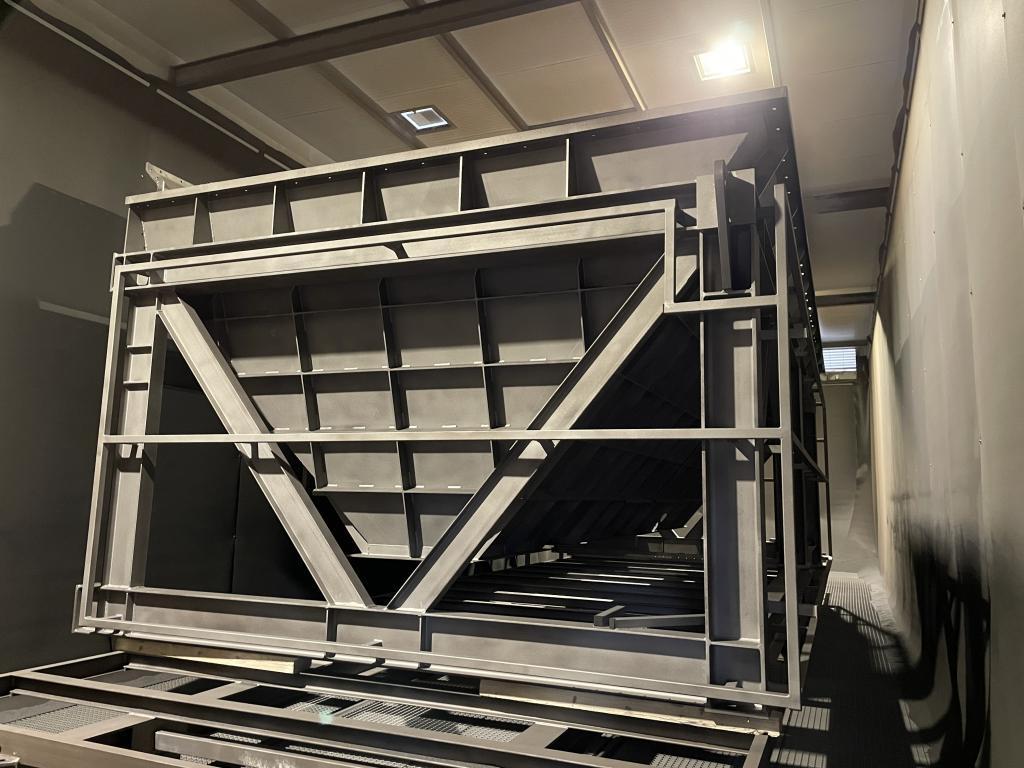
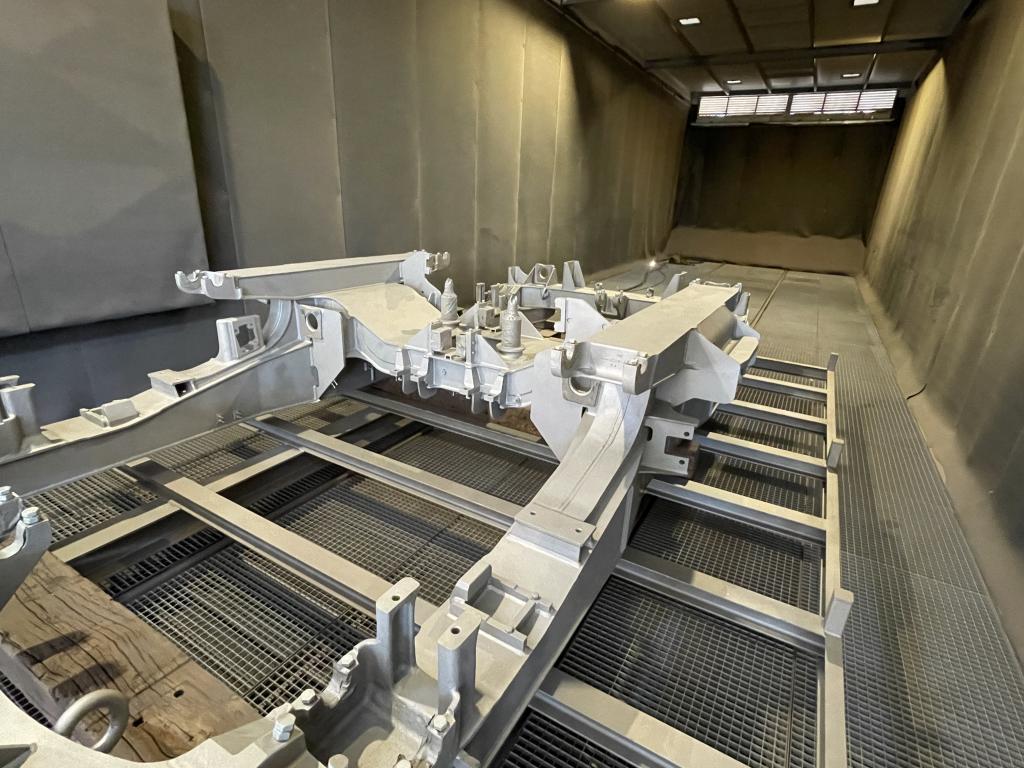
Surface preparation is a fundamental factor prior to beginning any painting work as poor surface preparation guarantees poor results when compared with those achieved from a well-prepared surface.
The nature of the material, its surface state, the existence of rust or old coats of paint and their size, together with the customer's requirements, will determine the preparation procedure to be followed, among which are:
Blasting: The surface to be prepared is bombarded with small particles of abrasive materials launched at high speed by means of compressed air through a hose equipped with a special nozzle. The abrasive material we use can be metal shot, copper slag, microspheres, bicarbonate, corundum, silicates, plastic shot, nut shell, etc.
Blasting preparation grades (UNE-EN ISO 8501-1):
► Sa1. Light blasting: The layer of loose lamination, any loose rust and loose foreign particles are removed from the support structure.
► Sa2. Thorough blasting: Removes almost all the lamination layer, any visible oxide and foreign particles are removed, until 66% of the surface is clean and gray in colour.
► Sa2½. Very thorough blasting: Removal of the entire lamination layer, together with almost all visible rust and foreign particles from the support structure are removed, until 95% of the surface is clean and white in colour, with occasional blots.
► Sa3. White metal blasting: The entire lamination layer, visible oxide and foreign particles are all removed from the support structure, until the entire surface is clean and white.
Degreasing: The presence of fats and oils must be completely removed before making a start with any painting or blasting operations. The most common procedures are cleaning with degreasers and water at very high pressure (750-2500 bar).
Manual and mechanical cleaning: This is understood to mean cleaning the surface by brushing, scratching, chopping and sanding the metal to remove rust, scale or old paint. This is undertaken when it is not possible to use other processes. The degrees of preparation by scratching and brushing are standardized according to UNE EN ISO 12944-4.